Cable winches – Applications and installation
Cable winches are powerful helpers for both commercial and leisure applications, offering numerous areas of use. Whether for vehicle or boat trailer transport, mobile lighting towers, or in agricultural and forestry settings.


The right pulling capacity for your area of application
The range of AL-KO VT cable winches with pulling capacities between 250 kg and 1,150 kg ensures you will find the right solution for every requirement: whether for vertical lifting of loads up to 1,150 kg, horizontal and inclined pulling of a non-rolling load up to 2,000 kg, or inclined pulling of a rolling load up to 7,400 kg. The gear-driven steel cable winches with plastic covers are robust and reliable.
Clever features such as the load pressure brake, automatic cable unwinding and removable crank make operation easier and protect both the user and the loads being moved. To ensure safety when using cable winches, you should familiarise yourself thoroughly with the product description of your model and make sure you select the correct pulling capacity for your area of application already at the time of purchase.
Correct installation of cable winches
There are also a few important points to consider when it comes to installation. In principle, the cable winch can be mounted on the vehicle using a mounting kit or base frame (mounting plate, winch bumper). Depending on the vehicle type, both mounting kits and winch bumpers are available as type-specific models, which should also be used for installation.
The cable winch should never be mounted to the towbar, as this is not usually designed to withstand the maximum pulling force of the winch.
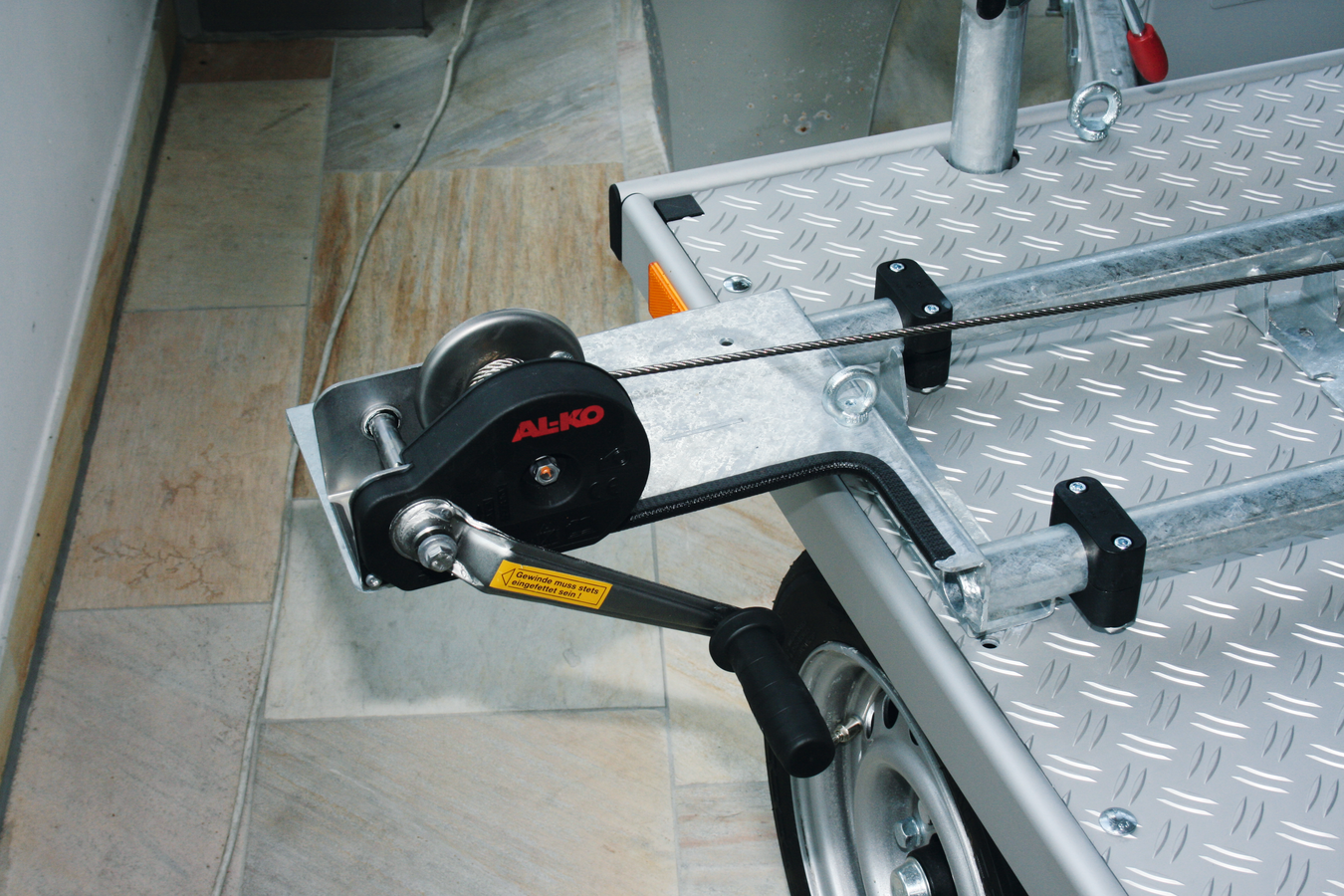
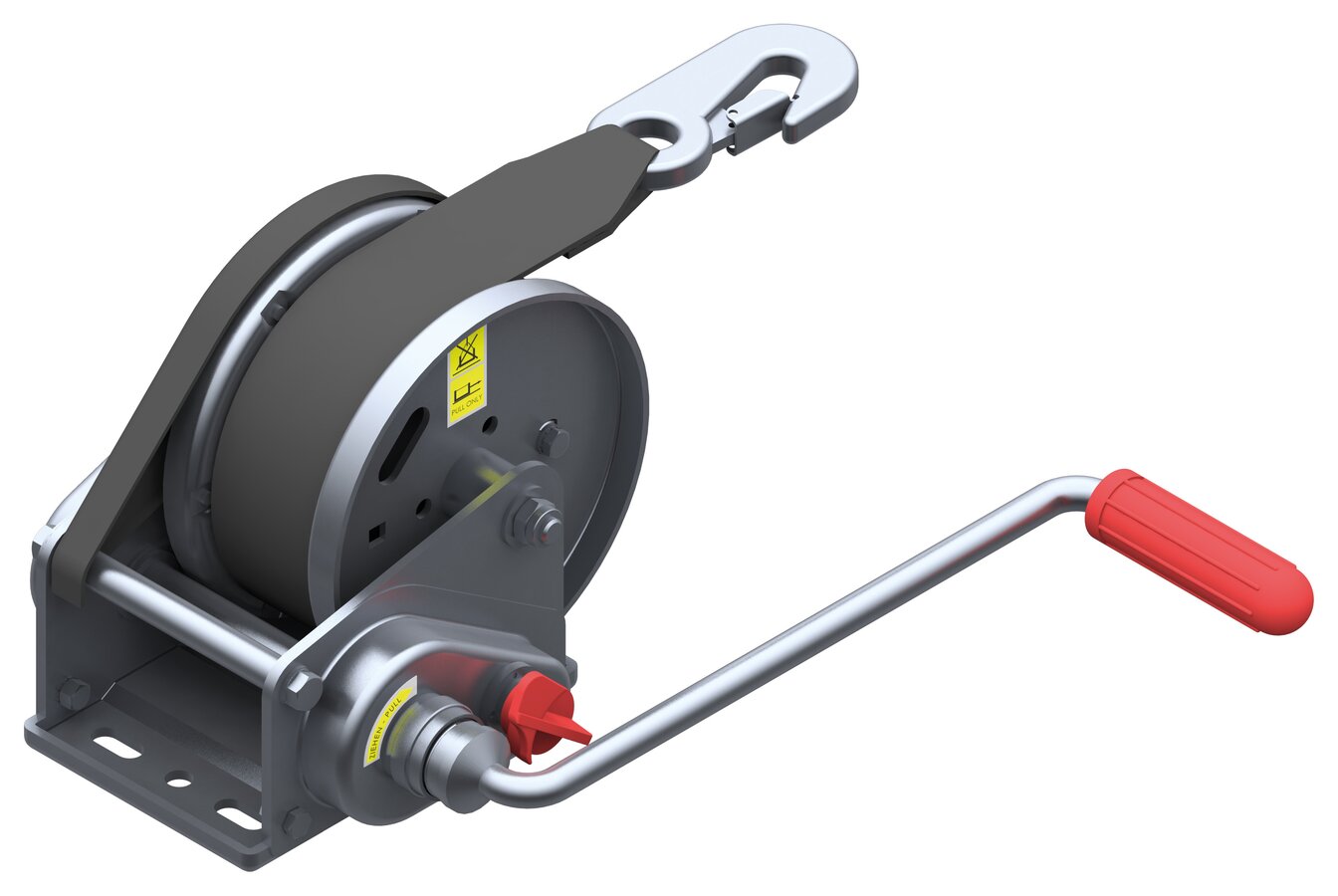
AL-KO VT cable winches: Basic or Plus?
AL-KO VT offers the product lines BASIC and PLUS. BASIC winches are particularly suitable for private use, whereas PLUS winches are designed specifically for commercial applications, as they are rated for higher loads. The PLUS winches are BG (DGUV) certified and thus meet all the requirements of accident prevention regulations.
